Estimated reading time: 9 minutes
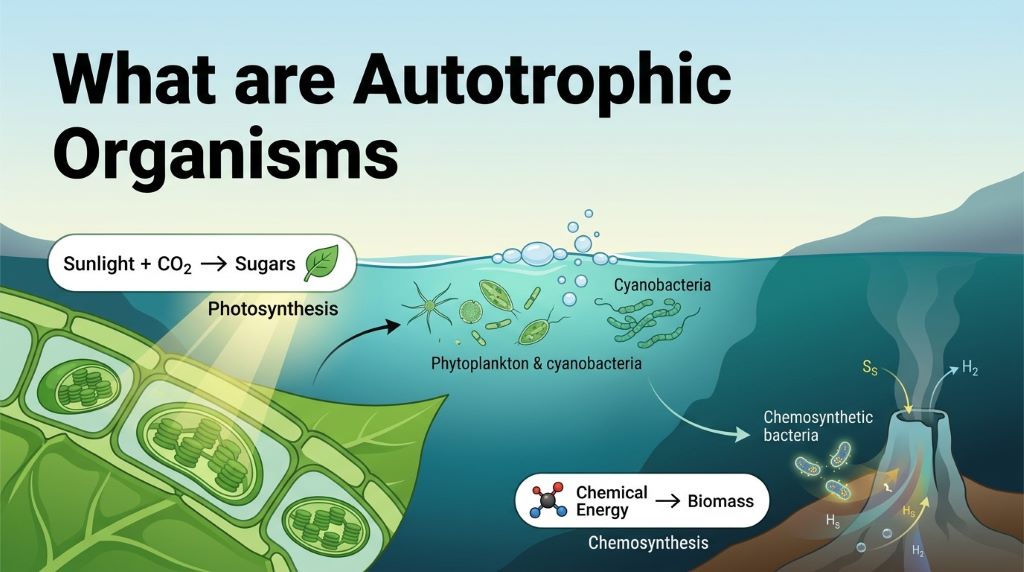
Autotrophic organisms make their own food. If you want to know what are autotrophic organisms, they use carbon dioxide and water. In fact, they need sunlight or chemical energy. In other words, they produce their own nutrients. Plants are common examples of autotrophs. Algae also belong to this group. Some bacteria can also make their own food. With this in mind, they are called producers. As can be seen, they form the base of food chains. They support all life on Earth.
Key Takeaways on What Are Autotrophic Organisms
- Autotrophic organisms make their own food.
- They use carbon dioxide and water.
- They use sunlight or chemical energy.
- Food forms by photosynthesis or chemosynthesis.
- Plants, algae, and some bacteria are autotrophs.
- They are called producers in food chains.
- Photosynthesis changes light into chemical energy.
- Chlorophyll helps plants absorb sunlight.
- They turn simple substances into food.
- They give energy to all living beings.
- They help keep nature balanced.
- Life cannot exist without autotrophs.
What are autotrophic organisms
“Autotrophic organisms produce their own food using light or chemical energy.”
Autotrophic organisms are living things that make their own food. In fact, they use simple materials like carbon dioxide and water. In other words, they need sunlight or chemical energy to produce food. With this in mind, plants, algae, and some bacteria are examples. As can be seen, they act as producers in food chains. In this way, they support all life by providing food and oxygen.
Types of Autotrophic Organisms
To enumerate, two main types exist:
- Photoautotrophs – Use sunlight
- Chemoautotrophs – Use chemical reactions
Importance of Autotrophic Organisms
Autotrophic organisms matter because they support all life on Earth. If you want to know what are autotrophic organisms, they are living things that make their own food using simple substances like carbon dioxide and water. In fact, they use sunlight or chemical energy to produce nutrients. In other words, they act as producers and form the base of every food chain. With this in mind, they provide energy to all other organisms and release oxygen into the environment. As can be seen, they help maintain ecological balance and support life systems. In this way, without autotrophic organisms, life on Earth would not survive.
Energy Sources for Autotrophic Organisms
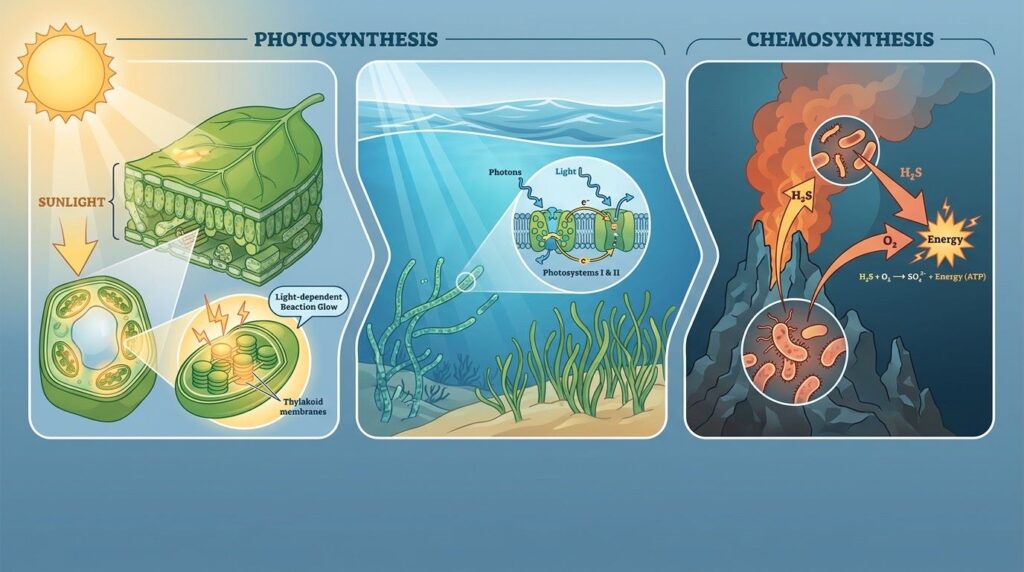
Autotrophic organisms use different energy sources to make their own food. In most cases, plants and algae use sunlight through photosynthesis. In other words, they turn sunlight, water, and carbon dioxide into food. This process also releases oxygen into the air. It helps support life on Earth.
In this case, some organisms use chemosynthesis instead of sunlight. They use chemical energy from substances like sulfur or ammonia. These organisms often live in dark places like deep oceans. All things considered, autotrophs survive using both light and chemical energy.
Some autotrophs use chemical energy instead of sunlight. These are called chemoautotrophs, and they are mostly bacteria. They live in places with no sunlight, like deep oceans or underground. In this case, they use chemicals like sulfur or ammonia to make food. This process is called chemosynthesis. All things considered, autotrophs can survive in many environments using different energy sources
What are Autotrophic Organisms and Carbon Fixation
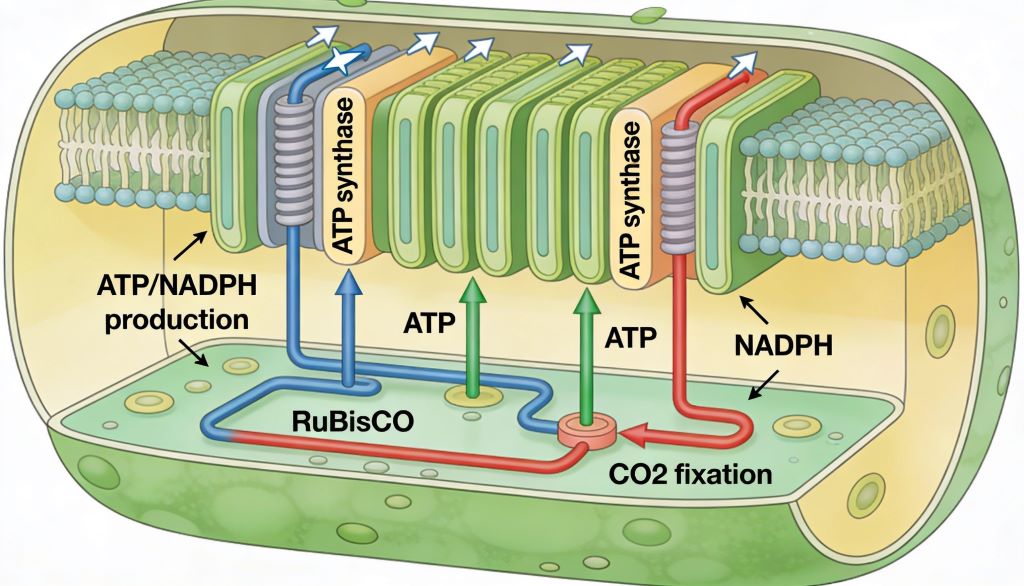
Autotrophic organisms are living things that make their own food. More to describe on what are autotrophic organisms, They use simple materials like carbon dioxide and water. In other words, they need sunlight to produce food through photosynthesis. With this in mind, plants, algae, and some bacteria act as producers. As can be seen, they support all other living organisms.
Carbon fixation is the process where carbon dioxide changes into food. In this case, plants use sunlight and chlorophyll for this process. In other words, carbon dioxide turns into glucose during photosynthesis. With this in mind, this stored energy helps plants grow. As can be seen, carbon fixation supports life on Earth.
What the Research Study Found about What are Autotrophic Organisms
What are autotrophic organisms, th ey make their own food using simple materials. Scientists studied a bacterium called Desulfovibrio desulfuricans. In general, they found a new way it fixes carbon. The microbe uses the reductive glycine pathway. It converts carbon dioxide into simple organic molecules. It uses hydrogen and sulphate as energy sources. The process is very energy efficient.
In short, this shows a new way life can grow using carbon dioxide. All things considered, this pathway adds to known carbon fixation methods.
Why Research on What are Autotrophic Organisms Matters
Research on what are autotrophic organisms matters because these organisms support all life on Earth. In fact, plants, algae, and some bacteria make their own food and release oxygen. With this in mind, they form the base of every food chain. In other words, animals and humans depend on them for survival.
In this case, studying autotrophs helps us understand food production and energy flow. It also explains how carbon dioxide is used in photosynthesis. With this in mind, this knowledge helps protect the environment. As can be seen, it guides farming, climate studies, and conservation efforts.
Key Insights from the Study
What are autotrophic organisms, they can use different chemical routes to make food. Microbes can survive in extreme environments. Energy-efficient pathways support better growth. In general, this research expands our understanding of life. In short, it shows how simple organisms sustain themselves.
- They support all living organisms.
- Animals depend on them for food.
- They maintain ecological balance.
- They help regulate carbon dioxide levels.
Examples of Autotrophic Organisms
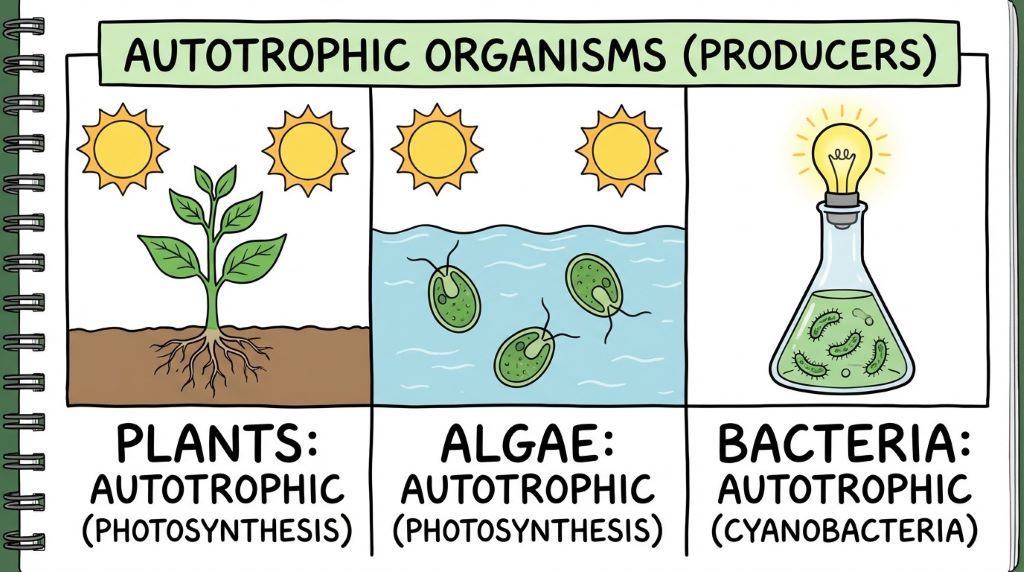
To list, common examples include:
Plants
What are autotrophic organisms? Plants use sunlight for photosynthesis to make their own food. In general, this process shows how autotrophs convert energy into useful compounds.
Algae
If you want to know what are autotrophic organisms, live in water and make their own food using light. In general, they use photosynthesis to convert energy into simple food. In short, they act as key producers in aquatic ecosystems.
Bacteria
What are autotrophic organisms some bacteria use chemicals instead of sunlight to make food. In general, the studied bacterium is a chemoautotroph. In short, it survives without sunlight by using chemical energy.
Autotrophs vs Heterotrophs : The Key Differences
To put it differently, autotrophs produce energy, while heterotrophs use it.
Table 2: Autotrophs vs Heterotrophs
| Feature | Autotrophs | Heterotrophs |
|---|---|---|
| Food Source | Self-made | Other organisms |
| Energy | Sunlight or chemicals | Consumed food |
| Examples | Plants, bacteria | Animals |
Environmental Role of Autotrophic Organisms
As a quick review for the quiz, let’s go over what are autotrophic organisms one more time. In this case, these organisms make their own food using light or chemicals. They form the base of the food chain. In other words, they support all life forms.
In this situation, plants, algae, and some bacteria act as autotrophs. They also release oxygen and store energy. All things considered, autotrophic organisms keep ecosystems balanced and stable.
Use in Agriculture and Industry
Autotrophic organisms play a key role in agriculture. Plants use sunlight to make their own food. In this case, they form the base of farming systems. Farmers grow crops like wheat, rice, and maize for food. These crops support human life as well as animal feed. In other words, agriculture depends on autotrophs for energy flow. They also help improve soil health. Crop plants fix carbon and support nutrient cycles. All things considered, autotrophs make farming possible and sustainable.
“Autotrophs form the base of the food chain and support all life”
In this situation, autotrophic organisms also help in modern farming methods. Algae and certain bacteria improve soil fertility. They add nutrients like nitrogen to the soil. This reduces the need for chemical fertilizers. In fact, this supports eco-friendly farming practices. Autotrophs also help in greenhouse farming systems. They grow faster under controlled light conditions. As can be seen, these methods increase crop yield and quality. This makes food production more efficient.
Autotrophic organisms also play a role in industry. In other words, they support many production processes. Algae are used to make biofuels and bioplastics. Plants provide raw materials like wood, fibers, and oils. These materials are used in paper, textiles, and energy industries. At any rate, autotrophs support sustainable production. They also help reduce pollution through carbon capture. All things considered, autotrophs are vital for both agriculture and industrial growth.
Real-Life Applications
What are autotrophic organisms as autotrophic processes help to solve global challenges. Explain in few points
- They support climate change research and carbon capture technologies.
- They also help in biofuel production and sustainable agriculture
- They support farming and agriculture systems.
- Autotrophs are used in wastewater treatment.
- Forests act as natural carbon sinks.
Conclusion
Autotrophic organisms are essential for life on Earth. They convert carbon dioxide into energy-rich compounds. In general, they support ecosystems and food chains. The study from Nature Communications shows new ways this happens. In conclusion, autotrophs reveal how life adapts and survives. Autotrophs drive life processes across the planet. In short, understanding autotrophs supports future solutions.
Read more on STEM Quiz
Frequently Asked Questions
Autotrophic organisms are living things that produce their own food by converting inorganic substances into organic nutrients using energy from sunlight or chemical reactions, in this way they form the base of many food chains. In simple terms, they make their own food instead of depending on other organisms, so they are often called primary producers in ecosystems.
Plants, algae, and some bacteria are common examples of autotrophic organisms. In fact, green plants use sunlight to make their own food. In other words, these organisms act as producers and support all other life.
They make food through photosynthesis or chemosynthesis. In this case, sunlight or chemical energy is used. With this in mind, they convert simple substances into nutrients.
Photosynthesis is the process of making food using sunlight. In this case, plants use chlorophyll. With this in mind, carbon dioxide turns into glucose and oxygen.
Reference
Sánchez-Andrea, I., Guedes, I. A., Hornung, B., Boeren, S., Lawson, C. E., Sousa, D. Z., Claassens, N. J., & Stams, A. J. M. (2020). The reductive glycine pathway allows autotrophic growth of Desulfovibrio desulfuricans. Nature Communications, 11, 5090. https://doi.org/10.1038/s41467-020-18906-7
- About the Author
- Latest Posts

I hold an M.Sc. from the University of Allahabad, with a specialization in molecular biology, microbiology, and genetics. My academic training has provided me with a strong foundation in life sciences and research-based learning. Alongside my studies, I have gained valuable professional experience in both education and social development.
I worked at A.M. Oxford Public School, where I guided students toward academic success and encouraged curiosity and critical thinking. This role helped me develop effective teaching methods and strong communication skills. In addition, I contributed to the Jeevan Jagriti Foundation, where I actively participated in community programs focused on improving educational access and awareness among underprivileged groups.
Through these experiences, I built important interpersonal, leadership, and organizational skills. Working in diverse environments allowed me to understand both classroom dynamics and real-world social challenges. I remain committed to using my knowledge and skills to support education, promote scientific understanding, and contribute to meaningful community development initiatives.