Estimated reading time: 13 minutes
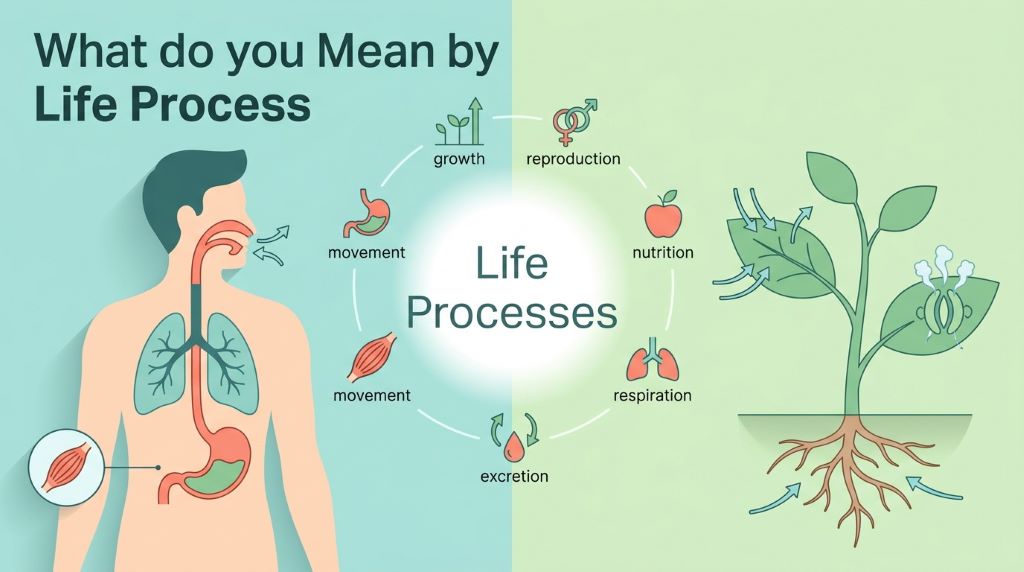
Your body works every second to keep you alive. Tiny cells handle key functions all day. These actions are called life processes. So, what do you mean by life process? They are simple steps that keep the body active and stable. These include eating, breathing, moving materials, and removing waste. In general, these steps keep your body in balance. They also help you grow and stay active. In short, life processes connect school science with real life. They also guide careers in health and science. All in all, they show how your body stays alive each moment.
Key Takeaways
- Life processes are basic actions that keep organisms alive.
- Nutrition and respiration provide energy.
- Transport and excretion keep the body balanced.
- These processes link science with real-life careers.
What Are Life Processes?
Life processes are simple actions that keep living things alive. So, what do you mean by life process? They are basic steps like nutrition and respiration. They also include transport and excretion. In general, these actions support growth and repair. To put it simply, they keep the body working well. In short, they are key ideas in biology.
In fact, all living things use these processes. Plants, animals, and microbes follow the same rules. With this in mind, life processes connect all life forms. This idea is easy to see in daily life.
Definition of Life Processes
Life processes are basic actions that keep living organisms alive. So, what do you mean by life process? They are essential activities like nutrition, respiration, transport, and excretion. In general, these processes help the body grow and repair. To put it simply, they keep all systems working well. In short, life processes maintain balance and support survival.
Importance of Life Processes
Life processes are essential for the survival of all living organisms. So, what do you mean by life process? They are simple actions that keep the body alive and active. These processes perform key functions like getting energy, growing, and removing waste. In general, nutrition and respiration provide energy, while transport and excretion maintain balance. To put it simply, these steps keep all body systems working well. In short, life processes support life and ensure proper functioning every day.
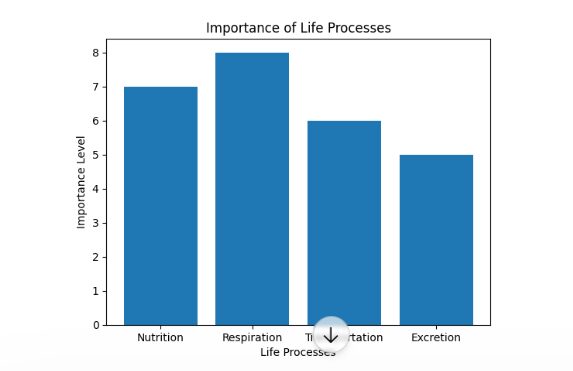
Details of graph–
Respiration shows the highest importance because it provides energy.
Nutrition supports growth and repair.
Transportation helps move materials in the body.
Excretion removes waste and keeps balance.
Characteristics of Living Organisms
- Living things need food, in general, for energy and growth.
- They perform respiration, in short, to release energy from food.
- Living organisms show growth, as can be seen over time.
- They respond to stimuli, in this case like light, heat, or touch.
- All living things reproduce, to this end, to continue their species.
- They carry out excretion, in effect, to remove waste materials.
- Living organisms show movement, in like manner inside or outside the body.
- They are made of cells, that is to say the basic units of life
Types of Life Processes
1. Nutrition: Getting Food
Nutrition is the process by which living organisms take in food and use it for energy, growth, and repair. So, what do you mean by life process? Nutrition is one key life process that keeps the body active. In general, it includes intake, digestion, absorption, and use of nutrients. To put it simply, nutrition helps the body stay healthy and strong. In short, it supports survival and daily activity.
Types of Nutrition
- Autotrophic Nutrition
- Heterotrophic Nutrition
Photosynthesis
Photosynthesis is the process by which green plants make their own food using sunlight, water, and carbon dioxide. So, what do you mean by life process? Photosynthesis is one key life process that helps plants survive. In general, it takes place in leaves with chlorophyll. It produces glucose and releases oxygen into the air. In short, this process supports plant growth and energy needs. In effect, it forms the base of the food chain. As can be seen, all animals depend on plants for food. To put it simply, it also keeps oxygen levels stable. In sum, photosynthesis is essential for life on Earth.
Digestive System
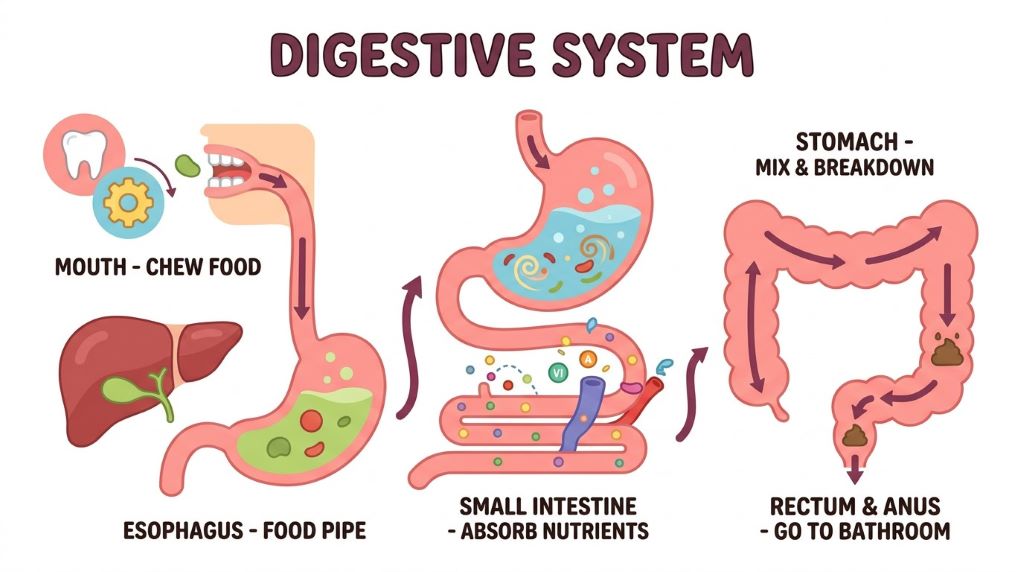
What do you mean by life process? A life process is a basic task that keeps an organism alive. The human digestive system is a great example. It starts in the mouth to break down food. In the first place, teeth chew food into small bits. It then goes down to the stomach. In a similar fashion, the stomach uses juice to turn food into liquid. This mix moves into the small intestine. As a matter of fact, this is where the body soaks up good nutrients. These nutrients go right into the blood. For this reason, the body gets the fuel it needs to work. In other words, the system turns meals into energy. In the final analysis, it helps you grow and stay strong every day.
2. Respiration: Releasing Energy
A life process is a core act that keeps a living thing going. Respiration is one such vital task. Cells use this process to get power from food. In the first place, the body takes in oxygen to burn glucose. In a similar fashion, this act sets free energy called ATP. This energy helps you move and grow. As a matter of fact, your body also makes waste like water and gas. For this reason, you must breathe out to clear the waste. In other words, it turns food into the spark of life. In the final analysis, every living thing needs it to stay alive.
The research article “Respiration as a dynamic modulator of sensory sampling,” published in Nature Communications in April 2026, explores how breathing influences the way we perceive the world. The study highlights that respiration is not merely a mechanism for gas exchange but acts as a dynamic modulator for sensory information processing
Aerobic Respiration
Aerobic respiration is the process in which living cells break down glucose fully in the presence of oxygen. Generally, this process releases a large amount of energy as ATP. In effect, carbon dioxide and water form as by-products. In short, it occurs mainly in the mitochondria of the cell. To put it simply, aerobic respiration provides steady energy for body activities. In sum, it is vital for efficient energy production.
Anaerobic Respiration
Anaerobic respiration is the process in which living cells break down glucose without oxygen. Generally, this process releases a small amount of energy as ATP. In effect, it produces waste like lactic acid in humans and animals. In like manner, yeast forms ethanol and carbon dioxide. Shortly, this process takes place in the cytoplasm of the cell. To put it simply, it provides quick energy when oxygen is not available. In sum, it supports short-term energy needs.
Cellular Respiration
Cellular Respiration is the series of chemical reactions that take place inside the cells of all living organisms to break down glucose and other organic molecules to release energy in the form of ATP (Adenosine Triphosphate), which is then used to power all biological activities of the cell.
Equation of Aerobic Respiration
C6H12O6+6O2→6CO2+6H2O+Energy (ATP)
In general, this equation shows how glucose reacts with oxygen. In short, it produces carbon dioxide, water, and energy. Effectively, the released energy powers all cell activities. To put it simply, this process keeps the body active and alive.
Breathing vs Respiration
Table: 1 Breathing vs Respiration
| Feature | Breathing | Respiration |
|---|---|---|
| Meaning | Air moves in and out of the lungs | Food breaks down inside cells |
| Type | Physical process | Chemical process |
| Place | Occurs in lungs | Occurs in cells |
| Function | Takes in oxygen | Releases energy |
| Control | Can be controlled for short time | Cannot be controlled |
3. Transportation: Moving Materials
Transportation is a biological process that moves essential materials within an organism. Generally, it carries nutrients, oxygen, water, hormones, and waste. In short, these substances travel from one part to another. In effect, this keeps all cells alive and active. To put it simply, transportation supports normal body functions. In sum, it helps the body stay balanced and healthy.
Transportation in Humans
What do you mean by life process? Life processes are basic functions that keep living things alive, such as breathing, eating, and moving materials inside the body. In humans, transportation is one key life process. In other words, blood moves oxygen, food, hormones, and waste to and from every body cell. For example, it picks up oxygen from the lungs and drops it off where cells need it. Along with that, blood carries nutrients from food we eat.
Components of Blood

- Plasma
Plasma is the liquid part of blood.
It makes up 55% of total blood volume
- Red Blood Cells (RBC)
Red blood cells are also called erythrocytes
They make up 44% of total blood volume
- White Blood Cells (WBC)–
White blood cells are also called leukocytes
They make up less than 1% of blood volume
- Platelets-
Platelets are also called thrombocytes
They are tiny fragments of larger cells
Human Heart
The human heart is a hollow, muscular, cone-shaped organ in the chest. In general, it lies slightly to the left between the lungs. Shortly, it acts as a strong pump that moves blood through the body. In effect, it sends oxygen and nutrients to every cell. It also removes waste products from tissues. To put it simply, the heart keeps the body active and alive. In sum, it supports continuous circulation and health.
Transportation in Plants
What do you mean by life process can be understood through transportation in plants. Transportation in plants is the movement of water, minerals, and food from one part to another through xylem and phloem. This system helps every plant cell get what it needs for growth and survival. In simple terms, it shows how plants keep living by carrying essential materials throughout their body.
Transpiration
Transpiration is the process by which plants lose water as vapour from leaves. So, what do you mean by life process? It is a basic activity that helps plants stay alive, and transpiration is one such process. In general, roots absorb water, and it moves upward through the xylem. Effectively, water escapes through tiny pores called stomata. In short, heat from the sun drives this loss. This creates an upward pull called the transpiration stream. To put it simply, transpiration helps in water movement and cooling. In sum, it supports plant survival and balance.
4. Excretion: Removing Waste
Excretion is the biological process by which living organisms remove harmful metabolic waste products that are produced as a result of chemical reactions taking place inside the cells, from the body to maintain a healthy internal environment and prevent toxic buildup that could damage cells and organs.
Excretory Organs in Humans
The Kidney
What do you mean by life process can be explained through the function of kidneys. Kidneys are bean-shaped organs found on both sides of the spine in the abdomen. They filter blood and remove waste like urea along with extra water to form urine. In this way, they help maintain the body’s chemical balance and support normal life functions.
Nephron
What do you mean by life process can be understood through the nephron in the kidney. A nephron is the basic unit that filters blood in a very simple way. In general, each kidney contains many nephrons working together. Shortly, it removes wastes and forms urine from the blood. In effect, it filters harmful substances, takes back useful materials, and removes extra water. Simply, it keeps the internal balance of the body stable. In the end, the nephron helps keep blood clean and supports healthy life functions.
Excretion in Plants

Excretion in Plants is the process by which plants remove or store the waste products produced as a result of metabolic activities such as photosynthesis and respiration to prevent toxic buildup inside their cells and maintain a healthy internal environment.
Dialysis
What do you mean by life process, A life process is a key job that keeps your body working. Cleaning the blood is one such job. When kidneys fail, dialysis must take over. This machine cleans the blood for a sick person. In the first place, it pulls out bad waste like urea. In a similar fashion, it draws out extra water and salt. This keeps the body in balance. As a matter of fact, the machine acts just like a real kidney. It filters the blood to keep it pure. For this reason, the person can stay healthy even with kidney loss. In other words, it does the work that the body cannot do alone. In the final analysis, this tool saves lives by mimicking a natural act.
Conclusion
Life processes are the basic actions that keep living things alive. So, what do you mean by life process? They are simple activities like nutrition, respiration, transport, and excretion. Generally, these processes help the body grow and repair. In short, they keep all systems working properly. In effect, they maintain balance and support survival.
What do you mean by life process can be understood in a broad way through all living organisms. Moreover , plants, animals, and humans depend on these basic functions every day. In general, these processes include nutrition, respiration, and other vital activities that keep life going. In simple terms, all living beings follow similar steps to survive and grow. Especially, without these processes, life cannot continue. In the end, life processes connect all organisms through shared functions that support survival and balance.
All in all, understanding life processes makes science easy and useful. It also helps in daily health and learning. In short, this knowledge builds a strong base for future studies. In sum, life processes explain how life continues smoothly.
Get more information on STEM-Quiz
Frequently Asked Questions
Life processes are basic actions that keep living organisms alive. In general, they include nutrition, respiration, transport, and excretion. In short, these processes help maintain life and support growth.
Life processes are important because they keep living organisms alive and active. In general, they help in growth, repair, and energy production. In short, they maintain body balance and support survival.
The main types of life processes are nutrition, respiration, transport, and excretion. In general, each process performs a specific role in the body. In short, they work together to maintain life and support survival.
Yes, plants also have life processes because they are living organisms. They carry out functions such as nutrition, respiration, transport, and growth to survive. These processes help plants make food, release energy, and maintain life activities
Reference
- Chalas, N., Saltafossi, M., Berther, T. et al. Respiration as a dynamic modulator of sensory sampling. Nat Commun 17, 3261 (2026). https://doi.org/10.1038/s41467-026-71604-8
- Karl Friston; Life as we know it. J R Soc Interface 6 September 2013; 10 (86): 20130475. https://doi.org/10.1098/rsif.2013.0475
- Gómez-Márquez, J. What is life?. Mol Biol Rep 48, 6223–6230 (2021). https://doi.org/10.1007/s11033-021-06594-5
- About the Author
- Latest Posts

I hold an M.Sc. from the University of Allahabad, with a specialization in molecular biology, microbiology, and genetics. My academic training has provided me with a strong foundation in life sciences and research-based learning. Alongside my studies, I have gained valuable professional experience in both education and social development.
I worked at A.M. Oxford Public School, where I guided students toward academic success and encouraged curiosity and critical thinking. This role helped me develop effective teaching methods and strong communication skills. In addition, I contributed to the Jeevan Jagriti Foundation, where I actively participated in community programs focused on improving educational access and awareness among underprivileged groups.
Through these experiences, I built important interpersonal, leadership, and organizational skills. Working in diverse environments allowed me to understand both classroom dynamics and real-world social challenges. I remain committed to using my knowledge and skills to support education, promote scientific understanding, and contribute to meaningful community development initiatives.