
Estimated reading time: 9 minutes
In Importance of Life Processes, Life processes hold huge importance for all living things. They help the body turn food into energy. Breathing brings in oxygen, and digestion breaks down food. Plants work in a different way. They use sunlight to make their own food. These steps help living things grow, stay healthy, and live each day.
Key Takeaways
- Life processes keep the body stable and balanced. They help living things stay alive and active.
- Nutrition and respiration give energy for growth. They also help repair the body and support daily work.
- Transportation and excretion move useful materials and remove waste. This keeps the body clean and healthy
Life Procesess
Scientific studies show that life is more than a structure. Life is a set of active processes. The study Life as we know it (2013) explains this idea. It shows that living systems stay organized and keep balance. This balance is called homeostasis. These processes help organisms sense their surroundings and act to survive. They also help cells stay stable and work well.
Another study, What is life? (2021), gives a clear view of life. It says life includes key processes like metabolism, growth, reproduction, and response to the environment. It shows that life is a continuous process, not just a thing. It also depends on energy and interaction with surroundings. These processes help us tell living things from non-living things.
Why Life Processes are Vital for Survival
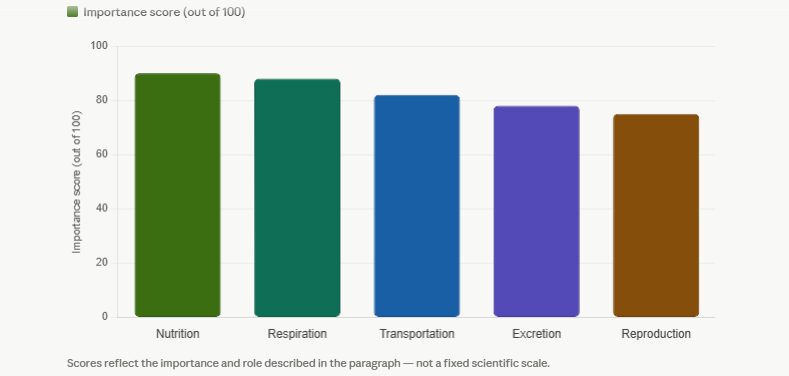
Life processes are the basic activities that every living thing must perform to stay alive. In this way, the Importance of life processes becomes clear, as they include nutrition, respiration, transportation, excretion, and reproduction. Without any one of these, an organism cannot survive for long, which highlights the Importance of life processes in daily life. Think of them as simple needs for life, just like a phone needs power and parts to work well.
Nutrition gives energy and raw materials for growth and repair, so the Importance of life processes is easy to see in how the body uses food. When you eat, your body breaks food into nutrients that power each cell. In addition, respiration turns these nutrients into usable energy called ATP, and this shows the Importance of life processes in keeping cells active even during rest. Without this step, cells would stop working very fast.
Transportation helps move oxygen, nutrients, and hormones to every part of the body, and it also carries waste away. In the long run, this again shows the Importance of life processes, as the heart and blood vessels keep everything flowing smoothly. Excretion then removes harmful wastes like urea and carbon dioxide, so the body stays clean and safe, proving the Importance of life processes in protecting health.
Reproduction allows living things to continue their species, which reflects the Importance of life processes beyond one single life. Even though one organism may die, it passes on its traits to the next generation. In the long run, all these processes work together, and if one fails, the others suffer, which clearly explains the Importance of life processes for survival.
Repair and Replacement of Damaged Tissues
One key reason life processes matter is that they help the body repair and replace damaged tissues. In this way, the Importance of life processes becomes clear when a small cut begins to heal on its own. The body quickly starts repair work, and this shows the Importance of life processes in keeping us safe and healthy. These processes work together, using nutrients, blood flow, and energy to fix damage.
Nutrition plays a major role in repair, and here the Importance of life processes is easy to see. It provides nutrients, especially proteins, that act as building blocks for new cells. In addition, without proper nutrition, healing slows down, which again shows the Importance of life processes. Circulation then carries these materials to the injured area, highlighting the Importance of life processes in transport. Blood brings oxygen and nutrients and removes waste, helping the tissue heal faster.
Respiration gives energy for repair, showing the Importance of life processes inside each cell. Cells use oxygen to release energy so they can grow and divide. Excretion removes waste formed during healing, which keeps the area clean and supports recovery. In the long run, all these processes work together, clearly proving the Importance of life processes in repair and survival.
Role of Life Processes in Tissue Repair
Table 1: Life Processes and Role in Repair
| Life Process | Role in Repair | Importance |
|---|---|---|
| Nutrition | Provides nutrients for new cells | Helps rebuild damaged tissue |
| Circulation | Transports oxygen and nutrients | Speeds up healing |
| Respiration | Releases energy (ATP) for cell growth | Supports cell division |
| Excretion | Removes waste products | Keeps tissue clean and safe |
The Energy Factory: Nutrition and Respiration
Living things need a steady supply of fuel to survive, and you get this fuel through proper nutrition. In this way, the Importance of life processes becomes clear, as plants make food using sunlight in photosynthesis, while animals eat other organisms and digest food into small molecules that quickly enter the bloodstream. In addition, these nutrients support growth and repair, keeping the body active and strong.
Before any movement, your body needs chemical energy, so respiration releases energy inside every cell. In this process, oxygen breaks down glucose to form adenine triphosphate (ATP), which works like a rechargeable battery for cells. In the long run, just like an electric car needs a charged battery, your body needs ATP to function well, and breathing keeps this energy cycle running smoothly.
Energy Statistics in Humans
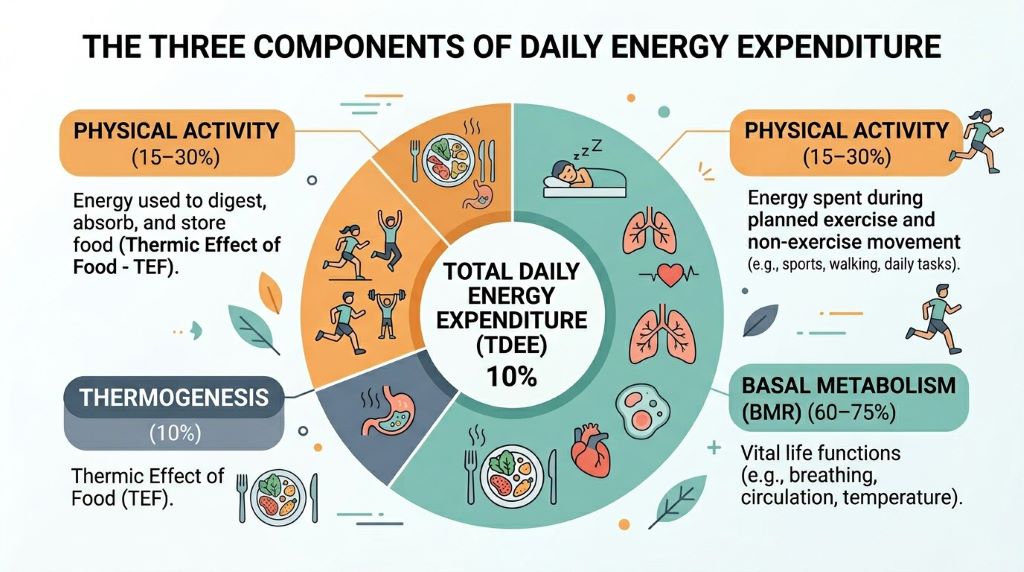
- Basal Metabolism (60–75%): The body uses most energy here; it keeps vital functions like breathing and heartbeat running.
- Physical Activity (15–30%): This energy helps muscles move, so you can walk, run, and do daily tasks.
- Thermogenesis (10%): This part uses energy to produce heat, which keeps the body warm.
The Delivery Network: Transportation and Excretion
Nutrients must reach every cell, and in this way, the Importance of life processes becomes clear. Your heart works as a strong pump, pushing blood through long vessels so oxygen and nutrients reach all parts of the body. Consequently, blood collects waste products, which helps keep the body clean and balanced.
In plants, a similar system works well, where xylem carries water from the roots and phloem moves food from the leaves. In the long run, this steady flow ensures each part gets what it needs to grow and stay healthy.
Waste can harm the body, so it must leave quickly; in this way, the Importance of life processes becomes clear. Excretion acts as the final cleanup, where the kidneys filter blood and remove nitrogen waste and extra water. Consequently, this process keeps the internal system clean and safe.
In plants, waste leaves as gases like oxygen, while some is stored in old leaves. In the long run, just like a regular trash day, removing harmful substances helps maintain a healthy and balanced environment.
Coordination and Growth: The Control Center

Living things must respond fast to survive, and in this way, the Importance of life processes becomes clear. Your nervous system sends quick signals that help you react, such as pulling your hand from a hot object, while the brain processes these inputs. In addition, hormones add chemical control by guiding growth and mood.
In the long run, these systems work together to keep the body steady and balanced, and this stable state is called biological homeostasis.
Steps of the Growth Process
- Cell division makes new cells. This helps the body grow and repair.
- Cell enlargement makes cells bigger. This increases body size.
- Differentiation makes special cells. Each cell has its own job.
- Maturation helps cells reach full function. This helps them work well.
Conclusion
Life processes are the basic functions that living organisms perform to stay alive. In this way, the Importance of life processes becomes clear, as they include nutrition, respiration, circulation, excretion, and reproduction. Each process has its own role, and none can be replaced, which shows the Importance of life processes in survival. Nutrition gives fuel, respiration releases energy, circulation moves materials, excretion removes waste, and reproduction carries life forward. In the long run, these processes work together and keep life going on Earth, proving the Importance of life processes again.
Understanding these processes helps students learn how the body works, and this highlights the Importance of life processes in daily life. It also helps them see how to stay healthy through good food, exercise, and clean habits. In addition, this knowledge is not just for exams, as it builds a clear idea of how the body lives and grows, which shows the Importance of life processes in making smart choices.
Life processes also explain how living things adapt to their surroundings, and this shows the Importance of life processes in nature. A fish lives in water by adjusting its breathing, while a cactus survives in dry land by storing water. As a result, all living things follow the same basic processes, and this connection clearly reflects the Importance of life processes across all life forms.
In short, life processes are the reason life exists at all. In this way, the Importance of life processes stands out as the foundation of biology and the natural world. Whether a person becomes a doctor, farmer, or simply wants to live well, understanding these processes gives useful knowledge for life, once again showing the Importance of life processes in every moment.
To test your potential, check STEM-Quiz
Frequently Asked Questions
Life processes are the basic biological activities that every living organism must carry out to stay alive. They include nutrition, respiration, transportation, excretion, growth, response to stimuli, and reproduction. Without these processes working together, no organism can survive.
Life processes keep every cell in the body functioning properly. They supply energy, remove waste, transport materials, and allow organisms to grow and reproduce. If even one life process stops working, the whole organism is affected and may not survive.
All life processes are equally important because they depend on each other. However, nutrition and respiration are often considered the most fundamental, since nutrition provides the raw materials and respiration converts them into the energy that powers every other process
References
- Karl Friston; Life as we know it. J R Soc Interface 6 September 2013; 10 (86): 20130475. https://doi.org/10.1098/rsif.2013.0475
- Gómez-Márquez, J. What is life?. Mol Biol Rep 48, 6223–6230 (2021).https://doi.org/10.1007/s11033-021-06594-5
- About the Author
- Latest Posts

I hold an M.Sc. from the University of Allahabad, with a specialization in molecular biology, microbiology, and genetics. My academic training has provided me with a strong foundation in life sciences and research-based learning. Alongside my studies, I have gained valuable professional experience in both education and social development.
I worked at A.M. Oxford Public School, where I guided students toward academic success and encouraged curiosity and critical thinking. This role helped me develop effective teaching methods and strong communication skills. In addition, I contributed to the Jeevan Jagriti Foundation, where I actively participated in community programs focused on improving educational access and awareness among underprivileged groups.
Through these experiences, I built important interpersonal, leadership, and organizational skills. Working in diverse environments allowed me to understand both classroom dynamics and real-world social challenges. I remain committed to using my knowledge and skills to support education, promote scientific understanding, and contribute to meaningful community development initiatives.