
Estimated reading time: 7 minutes
A Japanese team from Kyoto University has created a special molecule that gives off the purest light ever seen from an organic material. Its emission spectrum is similar to what you would expect from a cutting-edge LED light The light is only 6.9 nanometers wide, making it the cleanest, most pure form of color ever produced by an organic molecule.
This breakthrough solves a long-standing problem that has existed for years. Before many organic LEDs produced blurry, muddy colors that could not match with the purity of inorganic LEDs lights. The new molecule changes everything that is from achieving color purity for various organic materials around the lighting systems that we see everyday around us. This will pave the way for brighter, more vibrant screens and displays on phones, TVs, and even on wearable devices in our daily lives. Through this article, let’s see more about the novel invention by scientists that has helped to transform our lives completely for our good.
Emission Spectrum LED: A Breakthrough in Light: Key Takeaways
- A Kyoto University team developed a new organic molecule that achieves a record emission purity of 6.9 nm, surpassing the previous generations of lighting system and solving the color purity issue surrounding the organic LEDs.
- This breakthrough enables brighter, more vibrant displays without the “green gap” problem, while enhancing energy efficiency and allowing tunable, ultra-pure colors.
- Devices demonstrated high external quantum efficiency and long operational lifetimes, proving real-world viability.
- The innovation sets a new benchmark for display technology and opens the door for flexible, bendable displays impossible with inorganic LEDs.
- Ultimately, it marks a turning point where organic materials can finally rival their inorganic counterparts in both purity and performance, with implications for screens, TVs, and wearable devices.
What Is Emission Spectrum LED Technology?
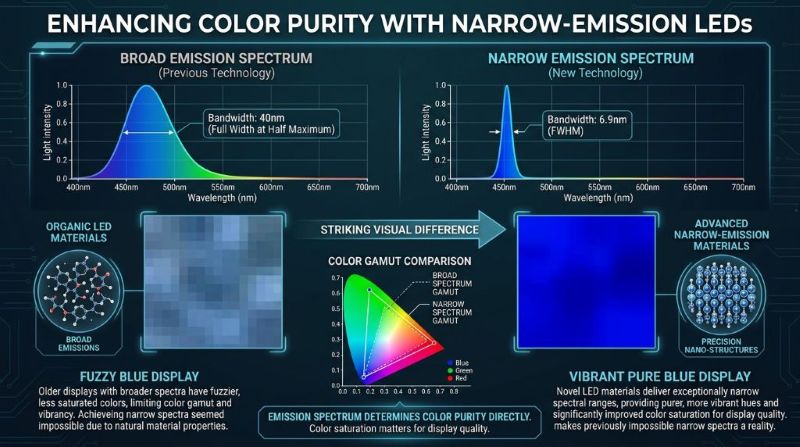
Fig.1 : An Infographic on Emission Spectrum LED Technology
The emission spectrum of an LED determines color purity: broader ranges produce fuzzier colors, while narrower ranges deliver purer, more vibrant hues. To illustrate this, a display with 40 nm bandwidth shows fuzzy blue; one with 6.9 nm bandwidth shows sharp blue that is a striking difference to the human eye. Before this research, such narrow spectrums seemed impossible for organic materials. However, Kyoto University’s new molecule changes everything, opening new possibilities for display technology.
Why Narrow Emission Matters for Modern Displays

Fig.2 : An Infographic on the comparison between the inorganic wavelength and organic LED emitter wavelength
Color purity defines display quality. Inorganic LEDs suffer a “green gap”; OLEDs have broad emission above 40 nm. The Kyoto University breakthrough achieves a record 6.9 nm FWHM, directly solving these challenges. This paves the way for ultra-pure, energy-efficient displays that is a significant step forward.
The Green Gap Challenge
Inorganic LEDs suffer the “green gap,” while OLEDs offer tunability but historically lacked color purity, until now.Kyoto University has achieved a record 6.9 nm emission width in an organic molecule, surpassing inorganic purity. This enables ultra-pure blue and green colors, expanded color gamut, and improved efficiency, meeting BT.2020 standards.
In short, organic light is now both tunable and incredibly pure, paving the way for next-generation displays.
How the New Emission Spectrum LED Works
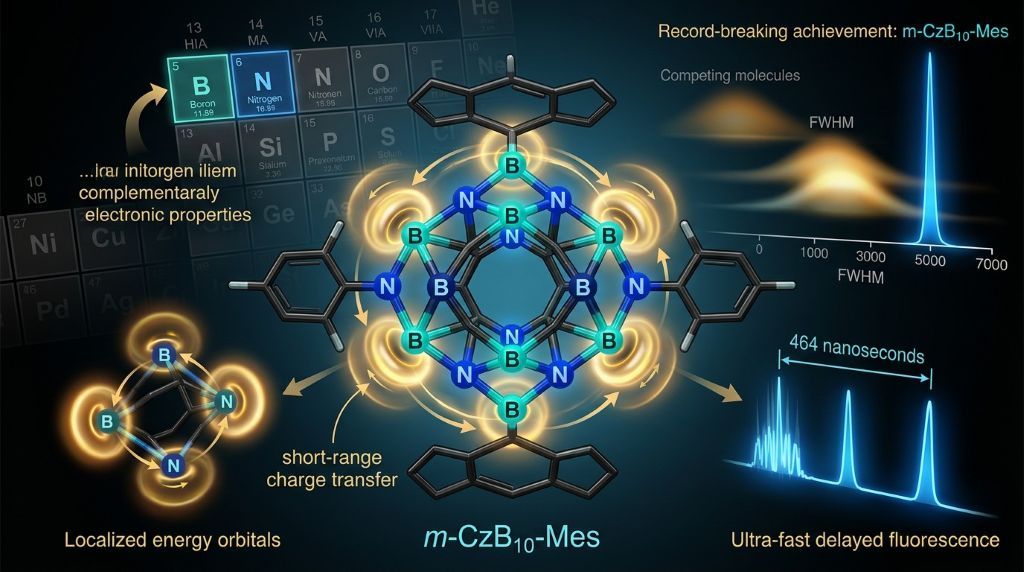
Fig. 3: An Infographic image on how New Emission Spectrum LED Works
This new technology uses nitrogen and boron atoms inside carbon frames to make very clean light. The molecule, m-CzB10-Mes, has ten boron atoms. It made light just 5.5 nanometers wide, the smallest ever. In a solid film, it was 9.1 nanometers wide. It used 99 percent of the light, almost perfect.
The material blinks on and off very fast, taking just 464 nanoseconds. This means it uses almost no extra energy. So, m-CzB10-Mes makes clean light, works quickly, and saves power. It is perfect for new screens and displays
Breaking Previous Records
Over 1,000 multiple-resonance compounds existed, but none broke 10 nm FWHM that is a hard limit for years. Researchers believed organics could not match inorganic purity.
But m-CzB10-Mes changes everything. It achieves 6.9 nm FWHM, beating the previous best by two-thirds—a dramatic leap. This overturns conventional understanding. Scientists thought more boron would broaden emission, but modular repetition amplified the multiple-resonance effect while preserving narrow emission.
What does this mean? First, organic emitters now rival inorganic purity. Second, smart design achieves record-breaking narrow emission. Third, a new benchmark is set. Ultimately, this redefines what is possible in display technology.
Device Performance Validates the Breakthrough
Solution-processed OLEDs showed real-world potential. Specifically, devices with polymer hosts achieved narrow emission in films, reaching about 11 nm FWHM.
Moreover, external quantum efficiency hit 18 percent via optimized TADF-sensitized designs. Additionally, operational lifetime reached an estimated 1000 hours at 100 cd/m².
Key success factors are exceptional EL narrowness, a blue TADF sensitizer, high efficiency at elevated brightness, and low-cost fabrication suitability. As a result, commercial applications become realistic. Furthermore, solution processing enables large-area manufacturing and reduces costs versus vacuum deposition, ultimately pointing toward scalable display technologies.
Comparison with Existing Technologies
Consider the current landscape. First, quantum dots and perovskites achieve ~20 nm FWHM. In contrast, rare-earth ions reach 10 nm FWHM, but their wavelengths are fixed.
The new organic approach changes this. Specifically, it achieves a record 6.9 nm FWHM, narrower than all competitors, while tuning across the visible spectrum.Consequently, it offers narrow emission, flexible tuning, and organic flexibility. In short, it outperforms all three competitors and sets a new standard for display technology.
Future Implications for Display Technology
New screens need very pure colors. This new LED technology gives them exactly that. It makes colors just as pure as the best old-style LEDs. What’s more, these new LEDs are flexible. That means they can bend and fold. Old LEDs cannot do that.This is great for phones, TVs, and wearables. Green light works especially well. It is much better than before. As a result, the old “green gap” problem is now fixed.
But there is still room to make it even better. First, we can stop clumps in solid films. Second, we can move energy better. Third, we can use better hosts to make light sharper. Finally, this tech can also work for lasers and lights. In short, this new organic LED makes very pure colors. It works better than many old-style LEDs. Because of this, a new time has begun for organic LEDs. Colors are now as pure as scientists once thought impossible. This changes what screens can do.
Frequently Asked Questions( FAQS)
This molecule, m-CzB10-Mes, achieves the purest light ever from an organic material with a record emission width of only 6.9 nanometers.
Narrow emission width matters because it delivers sharper, more vibrant colors, 6.9 nm produces crystal-clear blue versus fuzzy blue from 40 nm.
The “green gap” problem, where inorganic LEDs struggle with pure green that is solved because the new molecule achieves record purity in both blue and green.
m-CzB10-Mes outperforms all competitors with 6.9 nm FWHM, beating quantum dots (20 nm) and rare-earth ions (10 nm), while remaining tunable and flexible.
Visit STEM Quiz for engaging science quizzes and learning resources. The platform helps students explore scientific concepts interactively.
What’s Next for LED Innovation
To rephrase it simply, this breakthrough opens new research directions. Scientists can now explore even narrower spectra. Researchers will optimize efficiency further. Manufacturers will develop production-scale synthesis methods. Universities worldwide will license this technology.
For more information on LED display technology, check out entechonline.com’s LED advancement guide and their latest display research updates. Also visit STEM-Quiz’s technology news section for more cutting-edge discoveries.
References:
Mamada, M., & Hatakeyama, T. (2026). Dataset for “Organic spontaneous emission approaching the monochromatic limit” [Dataset]. In Zenodo (CERN European Organization for Nuclear Research). https://doi.org/10.5281/zenodo.19674736
- About the Author
- Latest Posts

Ms. Adrita Roy is a dual master’s holder specializing in Biological Sciences and Sustainable Development. She completed her Master’s in Biological Sciences from Bangalore University in 2025, followed by a Master’s in Sustainable Development from the University of Sussex in 2026.
With over three years of professional experience across biosciences, sustainability, education, ESG consulting, and science communication, Ms. Roy has developed a multidisciplinary profile focused on research, sustainability, and impactful communication.
Her subject expertise includes Biological Sciences, Sustainable Development, ESG consulting and sustainability frameworks, science communication, environmental awareness communication, and sustainability-focused content development. She also possesses expertise in Biology and Chemistry academic content development for Classes 11 and 12, including MCQs, assignments, case studies, and educational learning resources.
Ms. Roy is experienced in scientific writing, journal drafting, research communication, policy drafting, stakeholder engagement, sustainability reporting, web content creation, marketing communication, case study preparation, and master sheet preparation. Her multidisciplinary background enables her to combine research-oriented knowledge with effective communication strategies in the fields of science, sustainability, and education.